
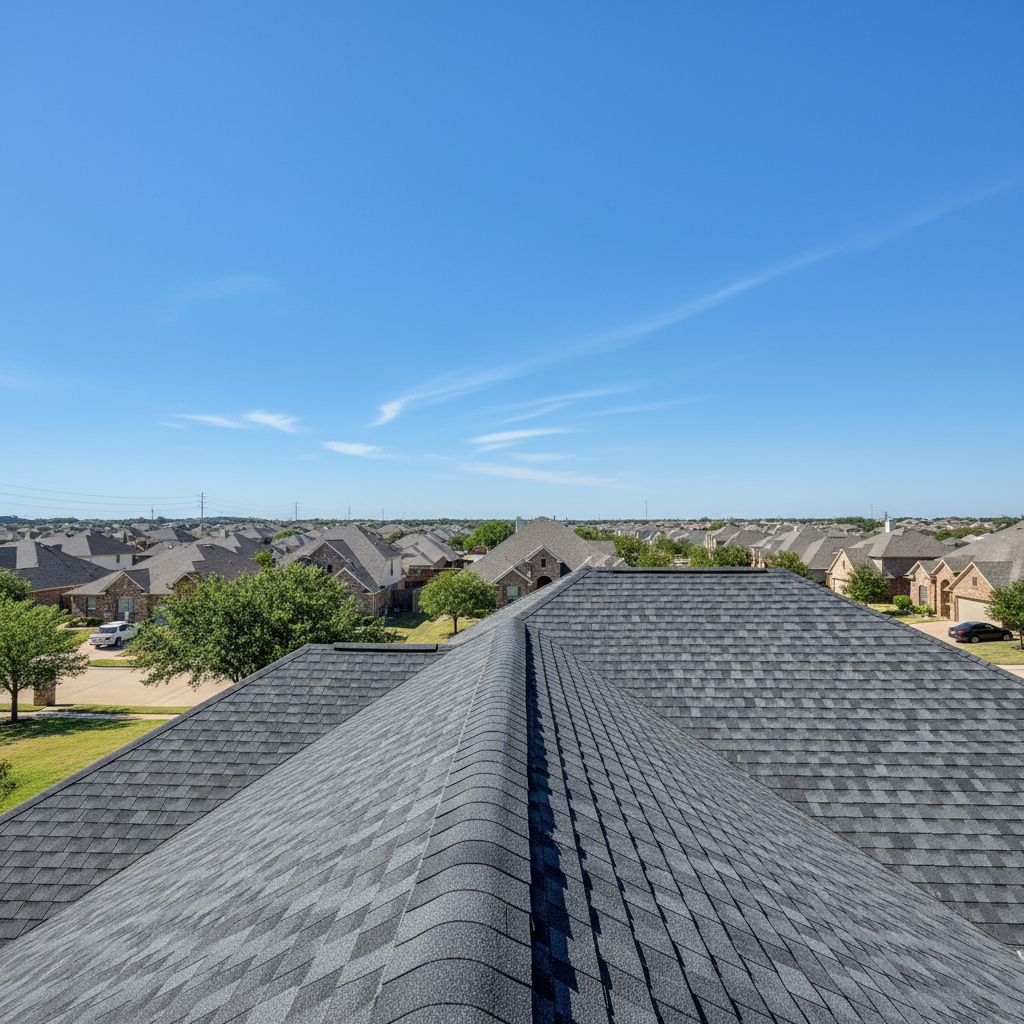
When roofing manufacturers publish lifespan figures for their products — 25 years for architectural shingles, 50 years for metal, 30 years for premium dimensional shingles — those numbers are not based on Texas conditions. They’re based on average U.S. climate assumptions that don’t account for the specific combination of heat, UV intensity, hailstorm frequency, and thermal cycling that DFW roofs deal with every year.
In my experience replacing roofs across Duncanville, Cedar Hill, Midlothian, Mansfield, and the surrounding metroplex, the real-world lifespan of most roofing materials in North Texas runs 20–30% shorter than what you’ll read on a national chart.
Understanding why — and what you can do about it — is the difference between a roof replacement that catches you off guard and one you planned for.
What Makes Texas Hard on Roofs
Before breaking down material-by-material lifespans, it’s worth understanding the specific stressors that make DFW one of the more demanding roofing environments in the country.
Heat and UV Exposure
Dallas-Fort Worth averages 229 sunny days per year. Combined with summer temperatures that regularly hit 100–110°F, that means roofing materials are subject to intense UV radiation and thermal stress for months at a time.
UV radiation breaks down asphalt binders in shingles, causing the granule layer to loosen and the shingle to become brittle. For each additional 10°F above 77°F, chemical degradation rates roughly double — a principle known as the Arrhenius equation. Your roof absorbs and radiates heat far more intensely than air temperature suggests: dark-colored roof surfaces in DFW can reach 170–180°F on a summer afternoon.
Hail Frequency
Dallas and Tarrant counties rank among the top U.S. metro areas for insured hail losses. The typical DFW home experiences a meaningful hail event (1 inch or larger) every 2–4 years. Each of those events causes cumulative damage — granule loss on asphalt shingles, denting on metal, cracking on tile — that compounds over the life of the roof.
A roof that might last 25 years in Kansas might only last 18–20 years in North Texas simply because it has absorbed more hail impacts over its life.
Thermal Cycling
North Texas sees dramatic temperature swings — not just between seasons, but within single days. Spring and fall routinely bring 40°F swings from morning to afternoon. Every heating and cooling cycle causes roofing materials to expand and contract. Over years, this fatigues seals, cracks underlayment, and loosens fasteners. This is especially damaging at valleys, ridges, and flashing points where different materials meet.
Humidity and Moisture
DFW’s summers are hot and humid. While our humidity is less extreme than Houston’s, it’s sufficient to cause problems at the margins: moisture gets under deteriorating shingles, algae and moss growth can accelerate on north-facing slopes, and inadequate attic ventilation allows heat and humidity to build up and cook the underside of the deck.
Asphalt Shingles: The Most Common Choice in DFW
Asphalt shingles dominate DFW roofing — they account for roughly 80% of residential roofs in the metroplex. Two types matter for homeowners:
3-Tab Shingles
If your home was built before 2000, there’s a reasonable chance it has 3-tab shingles — thin, flat shingles with cutouts that create the appearance of three separate shingles per strip. These are largely obsolete now but still on a lot of roofs.
National average lifespan: 20–25 years Realistic DFW lifespan: 15–18 years
The thin profile (typically 2–3 lbs per square) means less granule coverage and faster UV degradation. 3-tab shingles also have poor wind resistance — 60–70 mph uplift ratings are common, and DFW thunderstorms routinely exceed those speeds. If you have a 3-tab roof that’s over 15 years old, it is likely in the final phase of its serviceable life.
Architectural (Dimensional) Shingles
Architectural shingles — also called dimensional or laminated shingles — are the current standard. They’re thicker (4–5 lbs per square), have a layered profile that creates visual depth, and are significantly more wind- and impact-resistant than 3-tab.
National average lifespan: 25–30 years Realistic DFW lifespan: 18–25 years
Within architectural shingles, there’s a significant range in quality. Standard architectural shingles at the low end of the market perform closer to the 18-year figure in DFW. Premium architectural shingles — products like Owens Corning Duration, GAF Timberline HDZ, or CertainTeed Landmark Pro — with impact ratings (Class 3 or Class 4) perform significantly better, sometimes reaching 22–25 years in DFW conditions.
Impact-Resistant Shingles
Impact-resistant (IR) shingles are a category worth highlighting specifically for North Texas. These are architectural shingles manufactured with a rubberized polymer that allows the shingle to flex on impact rather than fracturing. They’re tested under UL 2218 standards, and Class 4 is the highest rating.
Realistic DFW lifespan: 20–28 years
In addition to longer lifespan, Class 4 shingles earn insurance premium discounts from many Texas carriers — often 15–30% annually. Over 20 years, that discount can offset several thousand dollars of the upfront cost premium (typically $1,000–$3,000 more than standard architectural shingles on a full replacement).
If you’re replacing a roof in North Texas, I strongly recommend at least having the IR shingle option priced. On most homes, the premium pays for itself in 3–5 years of insurance savings.
Metal Roofing
Metal roofing has become significantly more popular in DFW over the past decade. Two types are common in residential applications:
Standing Seam Metal
Standing seam is the premium tier — concealed fasteners, continuous panels that run from ridge to eave, and excellent performance in wind and hail. The panels interlock at raised seams rather than being exposed-fastened.
National average lifespan: 50–70 years Realistic DFW lifespan: 40–60+ years
In Texas conditions, metal roofing performs extremely well. The material is not affected by UV degradation the way asphalt is. Quality standing seam panels in steel or aluminum won’t crack or become brittle. Hail that would damage asphalt shingles typically only creates cosmetic dents in metal (though severe large-hail events can create dents that affect drainage).
The primary DFW-specific concern with metal roofing is thermal expansion. Standing seam panels are designed to accommodate expansion through the floating clip system — but cheaper exposed-fastener metal systems develop leak points over time as fasteners loosen through repeated thermal cycling. This is one reason standing seam, despite higher upfront cost, outperforms screw-down metal panels over the long term.
Exposed-Fastener Metal Panels (R-Panel, 5V Crimp)
Common on agricultural buildings and lower-cost residential projects.
Realistic DFW lifespan: 25–40 years
Performance degrades earlier than standing seam because the exposed screw penetrations — with rubber EPDM washers — fail over time. In DFW’s thermal cycling environment, those washers compress and crack, creating leak points. Expect to inspect and re-seal fasteners every 8–12 years. At year 25–30, a full fastener replacement or re-roof becomes necessary.
Tile Roofing (Clay and Concrete)
Tile roofing is more common in DFW than many people realize, particularly in established neighborhoods and higher-value homes in areas like Mansfield, Southlake, and parts of Midlothian.
Clay Tile
National average lifespan: 50–100 years Realistic DFW lifespan: 40–60+ years
Clay tile is extremely durable in heat — the material actually benefits from the kiln-like conditions because it was fired at high temperatures during manufacturing. UV doesn’t affect it. Hail is a more significant concern: clay tile can crack under large hail (1.5 inches and above), and replacement tiles can be difficult to match on older installations.
The components that fail first on tile roofs in DFW are typically not the tiles themselves — it’s the underlayment and flashing. Underlayment beneath tile typically lasts 15–25 years, depending on the type. When underlayment fails, the roof leaks even though the tiles look fine from the street. Tile re-roofing often involves removing the existing tiles, replacing the underlayment and damaged decking, and reinstalling the tiles — a significant job.
Concrete Tile
Realistic DFW lifespan: 35–50 years
Concrete tile is slightly more susceptible to hail cracking than clay and is heavier (which requires verified structural capacity). Color on concrete tile can fade more noticeably than on clay or metal over time. Otherwise, performance in heat is excellent.
Wood Shake and Cedar Shingles
I’m going to be direct here: wood shake is a poor choice for North Texas roofing. It’s expensive, requires significant maintenance (cleaning, treatment to resist algae and rot), and the Texas heat accelerates checking and splitting. In terms of fire resistance, cedar shake is Class C without treatment — and given DFW’s summer drought conditions and fire weather, this matters.
Realistic DFW lifespan: 15–20 years with proper maintenance (which most homeowners don’t do)
I see more cedar shake roofs that failed prematurely in the Dallas-Fort Worth area than almost any other material. If you have one, it’s worth an inspection to understand where it is in its lifespan.
How to Extend Your Roof’s Life in Texas
Regardless of material, the following maintenance practices consistently extend roof life in the DFW climate:
Attic Ventilation
This is the most underappreciated factor in roof longevity. Inadequate attic ventilation allows heat to build up (temperatures above 140°F are common in poorly ventilated DFW attics in summer), which cooks the underside of the deck and accelerates asphalt degradation from below. Proper ventilation — typically a balanced system of soffit and ridge vents — should maintain attic temps within 10–15°F of outdoor ambient temperature.
If you’re replacing a roof and your current attic runs extremely hot, address ventilation at the same time. It’s a relatively modest add-on to a re-roof project that meaningfully extends the life of the new installation.
Annual Inspections
Have your roof inspected annually — either by a professional or by doing a careful visual check yourself. Look for:
- Missing, lifted, or curling shingles
- Granule accumulation in gutters (indicates shingle degradation)
- Exposed or damaged flashing at chimneys, vents, and walls
- Sagging or soft spots in decking
- Moss or algae growth (especially on north-facing slopes)
Catch problems early and repair them before they allow moisture intrusion into the deck. A $300 repair that addresses a failed flashing seal now prevents a $1,500 decking replacement later.
Post-Storm Inspections
After any significant hailstorm or straight-line wind event, get a roof inspection within 60 days. Insurance claims in Texas typically must be filed within one year of the storm event, but documenting damage promptly strengthens your claim and ensures damage doesn’t worsen before it’s addressed.
Gutters and Drainage
Keep gutters clean and properly pitched. Water that backs up behind a clogged gutter can wick under the first course of shingles or work behind fascia. In DFW’s heavy summer thunderstorms, a clogged gutter can overflow in ways that damage soffits and fascia repeatedly. Clean gutters twice a year — once in late fall after leaves drop, and once in spring before storm season.
Trim Overhanging Trees
Branches that overhang the roof abrade shingles in wind, deposit organic debris that holds moisture and feeds algae, and create an entry point for squirrels and other wildlife. Keep branches at least 6 feet from the roof surface.
When Is It Time to Replace?
Here’s a practical decision framework:
Repair if:
- The roof is under 15 years old and damage is isolated to a small area
- Fewer than 10% of shingles show visible damage
- Decking is sound (no soft spots, no water staining)
- The roof has had no major hail events
Replacement if:
- Asphalt roof is 18+ years old and showing widespread granule loss or curling
- Multiple hail events have accumulated significant damage over the roof’s life
- Decking shows widespread moisture damage or sagging
- Repairs would cost 30% or more of a full replacement
- You’re planning to sell and want a roof that passes inspection with no negotiation
Get an Honest Assessment
If you’re not sure where your DFW roof stands, Golden Construction DFW provides free inspections with no pressure. We’ll tell you honestly whether you’re looking at 3 more years or 10, where the vulnerabilities are, and what we’d recommend. Samuel Diaz inspects every roof himself before we provide any written estimate.
Call (945) 332-3044 to schedule your roof inspection, or request one online. We serve Duncanville, Cedar Hill, DeSoto, Waxahachie, Midlothian, Mansfield, and the greater DFW area.