
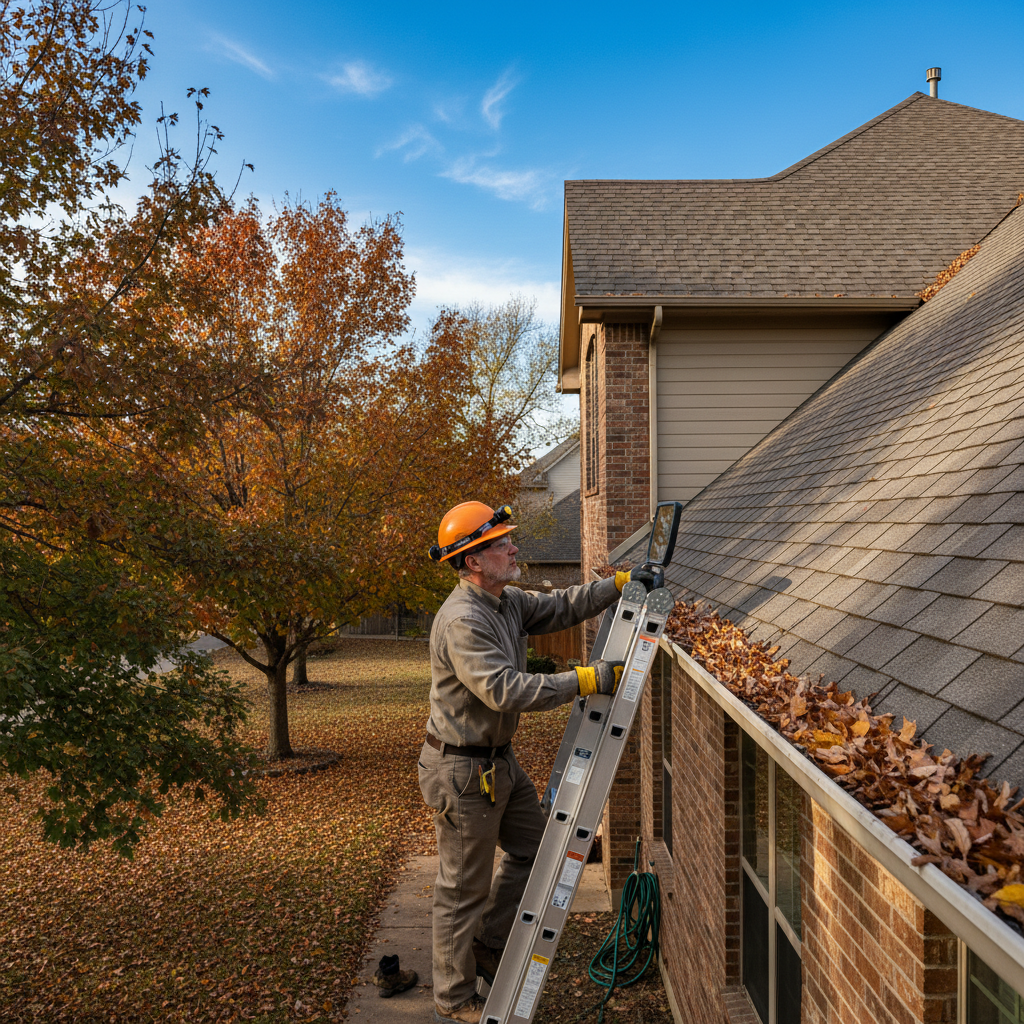
A properly maintained roof in Texas lasts 20–30 years on asphalt shingles. A neglected one may need replacement in 12–15. The difference is almost entirely maintenance — specifically, catching small problems before they become large ones and addressing the specific climate stresses that Texas imposes on roofing systems.
Texas roofs deal with UV radiation intensity that’s among the highest in the country, summer heat that drives attic temperatures past 160°F, hailstorms that can cause damage ranging from cosmetic to catastrophic, severe thunderstorm winds that test every fastener and flashing point, and rapid thermal cycling as 40°F mornings become 95°F afternoons. None of these stresses are optional — they come with the zip code. Regular maintenance is how you manage them.
This checklist is organized by season because Texas climate stresses shift throughout the year and the right maintenance activity at the right time makes the difference.
Why Roof Maintenance Matters More in Texas
Before getting into the checklist, it’s worth understanding what Texas climate actually does to roofing materials.
UV degradation is relentless. North Texas receives approximately 2,500–2,800 hours of sunshine annually — significantly more than the national average of 2,200 hours. UV radiation breaks down the asphalt binders in shingles, causing granule loss, brittleness, and ultimately cracking. This process is continuous and cumulative. You can’t reverse UV damage, but proper maintenance catches the early signs before granule loss becomes severe.
Thermal cycling causes mechanical fatigue. A Texas summer day might start at 65°F and climb to 100°F. Your roof surface may swing from 75°F at dawn to 165°F at peak sun exposure. This temperature swing causes materials to expand and contract repeatedly. Over years, this thermal cycling fatigues sealants at penetrations and flashings, loosens fasteners incrementally, and causes roofing materials to crack at stress points. Regular inspection catches these fatigue points.
Hail creates hidden damage. DFW averages 2–3 significant hailstorms per year, with some years producing damaging events in the 1.5–2.5 inch diameter range. Hail impact on shingles causes granule loss at impact sites, bruising of the asphalt mat beneath granules, and in severe cases, cracking or puncture. The damage isn’t always visible from the ground, and it degrades the shingle’s ability to shed water, leading to premature failure even if the shingle appears largely intact.
High winds test every attachment. Texas thunderstorms routinely produce wind gusts of 50–70 mph, and severe storms can exceed 90 mph. Wind uplift acts on loose or improperly fastened shingles, lifted flashing, and any point where the roofing system has lost its sealed integrity.
Spring Maintenance Checklist (March–May)
Spring is the most important maintenance window for DFW roofs. It follows the winter period (which can include ice storms, freeze-thaw cycles, and high winds) and precedes the peak hailstorm season of late spring and early summer.
Post-Winter Inspection
Walk the perimeter of your home and visually inspect from the ground with binoculars. Look for:
- Missing or displaced shingles. Any gaps in the shingle field are immediate water intrusion risks
- Lifted or curled shingle edges. Shingles that have lifted at edges or corners have lost their seal and are vulnerable to wind uplift
- Granule loss patterns. Heavy granule deposits in gutters after winter indicate accelerated shingle wear
- Visible sagging. Any area of the roof plane that appears to sag or dip warrants professional inspection — this indicates potential decking or structural issues beneath the surface
- Flashing condition at chimneys, vents, and valleys. Ice and freeze-thaw can lift flashings that were adequately sealed before winter. Look for gaps, lifted edges, or separations at metal flashings
Gutter Cleaning and Inspection
Gutters should be cleaned in spring after tree pollen, seeds, and winter debris have accumulated:
- Remove all debris from gutter channels
- Check that gutters slope correctly toward downspouts — standing water in gutters indicates improper slope or sagging
- Inspect gutter hangers and fascia attachment — freeze-thaw cycles can loosen hangers
- Check downspout extensions are directing water at least 4 feet from foundation
- Inspect gutter seams and end caps for separation — winter temperature cycling can break sealant at seams
Why gutter maintenance is roof maintenance: Overflowing gutters back water up under the roofing at the eave. This is called ice dam behavior in northern climates, but in Texas, simply clogged gutters cause the same moisture infiltration at the eave that eventually rots fascia and decking.
Attic Ventilation Check
Before summer heat arrives, verify your attic ventilation system is functioning:
- Check that ridge vents are unobstructed — insulation blown against the ridge from below, bird nests, or debris can block airflow
- Verify soffit vents are unblocked — check from inside the attic that daylight is visible through soffit vents
- Look for signs of moisture damage from winter — dark staining, mold on roof decking, or rusted nail heads indicate inadequate ventilation during cold months
A properly ventilated attic in a Texas summer sees peak temperatures in the 140–160°F range instead of 180°F+. The difference in shingle life is significant — each 10°F reduction in peak attic temperature extends shingle life by an estimated 10–15%.
Tree and Branch Clearance
Spring is a good time to assess tree proximity to your roof before summer storms:
- Branches within 10 feet of the roof surface can abrade shingles in wind and deposit debris continuously
- Dead or diseased branches over the roof are significant storm risks — contact an arborist for removal before storm season
- Trees with root systems near the foundation can eventually affect drainage patterns around the home
Summer Maintenance Checklist (June–August)
Summer in DFW means peak heat, UV intensity, occasional severe thunderstorms, and the continuation of hail season into early summer. The focus shifts from inspection to response and monitoring.
Post-Storm Inspection Protocol
After any significant storm — particularly hail or high-wind events — conduct a ground-level inspection within 48 hours:
- Check for obvious missing shingles or damaged areas visible from the ground
- Look for dented gutters, damaged soffit or fascia, or broken windows — these indicate the storm had sufficient force to potentially damage the roof
- Inspect the ground around the perimeter for granule concentrations — hail impact deposits granules from impact sites
- Check attic for any new light penetration or water staining after the first rain following the storm
If you see any of these signs, schedule a professional inspection. Don’t wait. Insurance claims for hail and wind damage in Texas typically must be filed within two years of the damage event, but carrier inspection schedules fill up quickly after major storm events. Early documentation protects your claim.
Ventilation Monitor
In peak summer, verify air conditioning returns and supply registers aren’t creating pressure imbalances that affect attic air movement. Signs of ventilation problems in summer include:
- Unusually high cooling bills relative to prior years
- Rooms that won’t cool adequately despite an operational HVAC system
- Visible moisture condensation on attic-adjacent surfaces
Sealant and Caulk Check
The high heat of Texas summer softens and degrades roofing sealants at penetrations — pipe boots, vent flashings, skylight perimeters, and chimney caulk lines. Inspect accessible sealant points:
- Pipe boot rubber collars (the cone-shaped rubber boot around plumbing vent pipes) crack and split under UV exposure, typically within 10–15 years. A failed pipe boot is one of the most common sources of residential roof leaks
- Counter-flashing caulk at chimney bases — check for gaps or separations
- Vent cover gaskets — HVAC flashing collars can lift at edges as sealant ages
Pipe boot replacement costs $100–$200 per boot and eliminates a common leak source entirely.
Fall Maintenance Checklist (September–November)
Fall brings the transition to severe weather season and tree leaf drop. It’s the preparation window before winter.
Comprehensive Pre-Winter Inspection
Schedule a professional roof inspection in October or November — before winter arrives. A professional inspection goes beyond what’s visible from the ground:
- Walking the roof surface to check each course of shingles for granule loss, brittleness, cracking, and edge integrity
- Hands-on testing of flashing seals and sealants
- Attic inspection for decking integrity, moisture signs, and ventilation adequacy
- Documentation of condition for future insurance claim baseline
A professional inspection costs $150–$350 from a legitimate roofing company. It’s worth having this documented prior to winter because storm damage that occurs over winter can be difficult to separate from pre-existing wear without prior baseline documentation.
Gutter Cleaning (Round Two)
Fall is the most important gutter cleaning window because leaf drop — from the large oak, pecan, and elm trees common throughout DFW neighborhoods — can fill gutters completely within weeks. Clogged gutters going into winter create ice dam risk if temperatures drop below freezing (which DFW sees several times per year), and standing water in gutters during winter freeze-thaw cycles accelerates corrosion and hanger damage.
Clean gutters in late October or November after leaf fall is largely complete.
Check Attic Insulation Depth and Condition
Before winter, verify attic insulation is at adequate depth — DOE recommendations for DFW (Climate Zone 3) are R-30 to R-60 for attic insulation. Inadequate insulation contributes to ice dams during winter cold snaps and to excessive heat gain in summer. Blown-in insulation settles over time; original installation at R-38 may have settled to R-30 over 15 years.
This is also the time to verify insulation baffles at the eaves — insulation should not block soffit vents at the eave. Baffles (plastic or cardboard channels) maintain the airflow path from soffit to ridge even as insulation fills the attic floor.
Chimney and Fireplace Inspection
If your home has a fireplace, fall is the time to have the chimney inspected and the cap, crown, and flashing checked before first use. Chimney caps that have deteriorated allow water into the flue and can allow wildlife entry. The chimney crown — the concrete collar at the top of the chimney — is a common point of moisture intrusion as it cracks under thermal cycling.
Winter Maintenance Checklist (December–February)
Texas winters are not Minnesota winters, but DFW does experience freezing temperatures, occasional ice storms, and periodic snow events. Winter roof concerns are different from the rest of the year.
Ice Storm Response
DFW typically sees 1–3 ice accumulation events per winter that reach meaningful thickness. During ice storms:
- Do not attempt to remove ice from your roof. The risk of injury is high and improper removal techniques cause more damage than the ice. Let it melt naturally.
- Monitor gutters for ice formation. Ice-filled gutters are extraordinarily heavy — if gutters are visibly bowing under ice weight, do not attempt to remove ice, but note any gutter damage for post-storm repair
- After ice melts, check for water intrusion in the attic. Any new staining on decking or insulation indicates a point where ice backup caused infiltration
Monitor for Leaks During Rain Events
Winter in DFW includes frequent rain events. After any significant rainfall, check:
- Attic for new staining, water, or drips
- Ceilings in top-floor rooms for water staining or soft spots — press gently on suspicious ceiling areas to detect soft spots that indicate moisture-saturated drywall
- Any area where roof meets wall (dormers, additions, roof-to-wall transitions)
Finding a leak at the source — the roof — is far easier and cheaper than discovering it after it’s migrated through the structure and appears on a ceiling that may be 10 feet from the actual entry point.
Debris Accumulation Check
Winter storms deposit debris — broken branches, windblown material — that accumulates in valleys, around penetrations, and at low-slope roof sections. After major wind events, visually check for debris accumulation. Debris dams water behind it and accelerates granule loss and deterioration at contact points.
When to Call a Professional
Some maintenance tasks are appropriate for homeowners comfortable on ladders; most roof inspection and all repair work is better performed by qualified roofing professionals. Call a professional when:
- You see active or recent water infiltration. Don’t wait for the next rain to confirm — the source needs to be found and closed
- You’ve had a significant hailstorm. Impact damage is best documented by someone trained to identify it
- Any shingle is missing. Water intrusion from a missing shingle can cause significant damage within a single rain event
- Flashing appears lifted or separated. This requires proper re-sealing or reflashing — not a caulk-gun fix
- You haven’t had a professional inspection in more than two years
- Your roof is more than 15 years old. Annual inspection is appropriate to track wear progression and catch any issues before they become structural
Golden Construction DFW performs roof inspections, maintenance repairs, and full replacement across Duncanville, Cedar Hill, Midlothian, Mansfield, and surrounding DFW communities. If your roof is due for inspection or you have storm damage concerns, call Samuel Diaz at (945) 332-3044 to schedule a free assessment.
Annual Roof Maintenance Summary
| Season | Priority Tasks |
|---|---|
| Spring | Full visual inspection, gutter cleaning, post-winter damage check, attic ventilation verify, branch clearance |
| Summer | Post-storm inspections, pipe boot and flashing sealant check, ventilation monitoring |
| Fall | Pre-winter professional inspection, gutter cleaning (post leaf drop), insulation check, chimney inspection |
| Winter | Ice storm monitoring, rain-event leak checks, debris accumulation after wind events |
A consistent maintenance routine — primarily inspection-focused, with prompt response when anything is found — is the most cost-effective roofing investment a Texas homeowner can make. Catching a lifted flashing in spring inspection costs a few hundred dollars to repair. Missing it until it causes a decking rot problem costs several thousand. The roof protects everything underneath it. Treat it accordingly.